
Did you know that most job seekers make up their minds about whether to apply for a job in less than a minute?
Yes, that fast!
That means your job description is not just a formality. It’s really your first impression. And if it is not clear, too lengthy, or dull, the right candidates probably will just scroll past without a second thought.
Many companies try to hire great people only to fail because these great people have never heard of the opportunities. It happened because the job description didn’t tell the story of the opportunity well. It either said too much, too little, or just didn’t connect with the reader.
Writing a strong job description isn’t complicated. With a few simple steps, you can create something that actually attracts the right people.
We’ll show you in this blog how you can make a job description that attracts the right people, step-by-step.
What Is A Job Description?
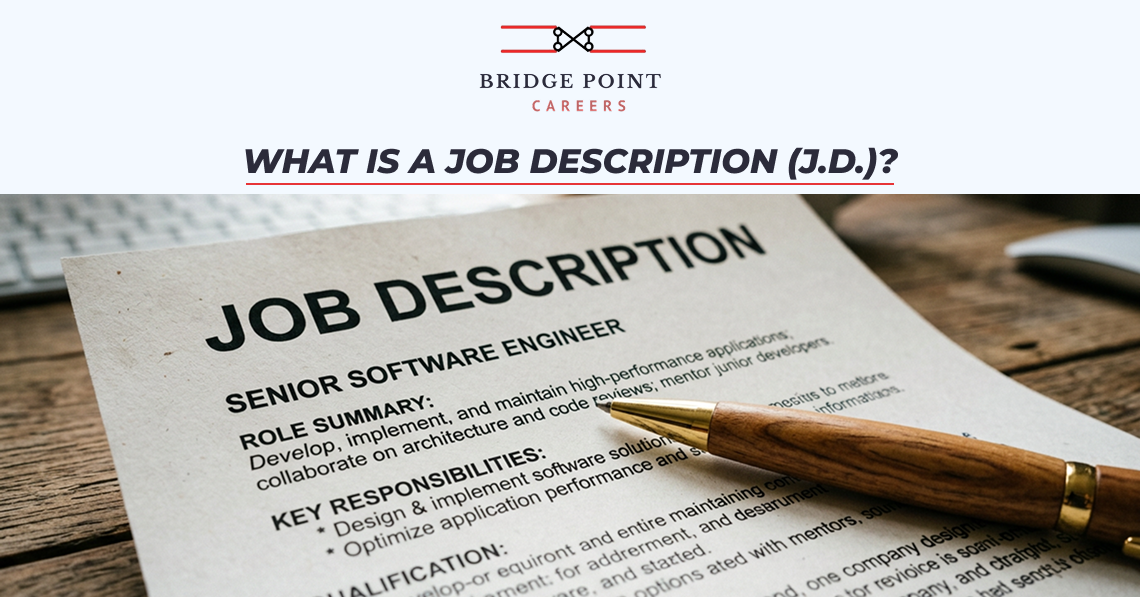
A job description is a clear and concise description of a job position. It’s the document that tells potential candidates what the job is about, what their main duties will be, and what kind of skills they should have.
You can think of it as a communication form between the employer and the prospective employee. It allows the employer to clarify what they expect from the employee, and the employee can evaluate if they want to pursue that opportunity. If it’s written well, it saves time for both sides.
A good job description doesn’t just list tasks, it gives a clear picture of the role. It provides answers to the primary questions a candidate might have before they decide to apply. The most critical function of a well-written job description is that it helps you draw in the right candidates, not just more candidates.
How To Write A Job Description (7 Easy Steps)
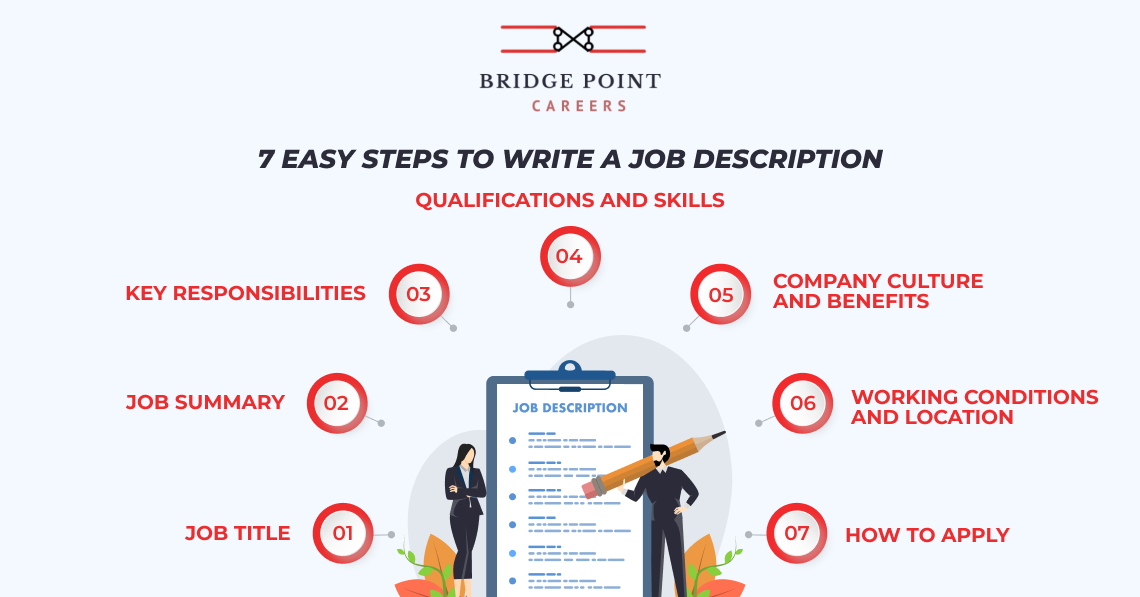
If you break down job descriptions into simple parts, it becomes much easier to create something clear, helpful, and attractive to the right candidates.
Let’s go step by step:
1. Job Title
A clean and evident job title should be your first step. Avoid using fancy or confusing terms that people don’t search for. A straightforward title like “Sales Executive” or “Software Developer” works much better than something creative but unclear. Your aim is to make sure the right candidates can easily find your opening.
2. Job Summary (The “Hook”)
Since this is the first part that candidates will see, it has to be powerful. Briefly describe the role and what makes it the one for them. It should be simple and captivating. If you make this section intriguing, the candidates will definitely want to continue reading.
3. Key Responsibilities (What They Will Do)
Identify the most important daily duties associated with the position in a clear manner. This will enable the applicants to visualize their regular work routine. Also, try to keep the list reasonable and do not include too many unnecessary elements. The clearer you are, the better the chances of attracting the right fit.
4. Qualifications and Skills (What They Need)
List the capabilities, experience, and credentials that the employee should have. It is also a good idea to divide “must-have” abilities and “nice-to-have” ones. This helps avoid scaring away good candidates who may not meet every single requirement.
5. Company Culture and Benefits
People pick not only jobs but also the places where those jobs are done. Give some insights into your company culture, values, and why your work environment is such a pleasant one. Also, mention the benefits like work-life balance, chances for career development, and other perks that may be important.
6. Working Conditions and Location
Where and how the work is done have to be very clear. Is the job remote, hybrid, or entirely in-office? Besides working hours and location, also list other essential conditions. This helps candidates decide quickly if the role fits their lifestyle.
7. How to Apply
Give the final point briefly and directly. How do candidates apply? Inform them of what documents they have to prepare and the address or website to send them. A straightforward and easy application process raises the number of quality applications you will receive.
Tips for Job Description
Now that you know the structure, let’s talk about a few simple tips that can make your job description even better.
Keep it Concise
Use clean and simple content so that it is easy for candidates to understand the role in a short time. Focus on what really matters and avoid unnecessary details.
Use Inclusive Language
The way you write matters. Use simple and neutral language that makes everyone feel welcome to apply. Avoid words that may unintentionally exclude certain groups.
Use Bullet Points
Bullet points make your job description easier to read. They help candidates quickly scan the information without feeling overwhelmed. This improves readability and keeps them engaged.
Regularly Update
It is quite common that job roles evolve, and that is why job descriptions need to be continually revised. You must update yours so that it always reflects the current responsibilities and expectations. You will certainly attract candidates who are most appropriate for the role as it is today.
How Is A Right J.D. Important To Attract The Right Hires?

Being transparent and straightforward with your J.D. helps a candidate to decide whether they want to work for you or not in hardly any time. This means fewer unqualified applications and more people who are actually a good match. It saves your time and makes the hiring process smoother.
It also builds trust. Candidates get a positive impression of a company when they view a top-notch job description. Besides that, it gives a hint that you are well-prepared, open, and earnest for recruiting the right people.
On the other hand, a vague or confusing J.D. can do the opposite. One may end up attracting unsuitable applicants and, even worse, driving away the ideal ones. Hence, investing some time in drafting the J.D. properly can substantially impact the quality of the hires you make.
Final Thought
Good job descriptions aren’t about packing in a ton of text; rather, it’s about using precise words.
When you keep it clear, simple, and honest, you make it easier for the right candidates to find you and apply with confidence. It helps you save time, avoid confusion, and build a stronger hiring process from the start.
There is no need to aim for perfection. Just be crystal clear about your requirements and what you have on offer. Even small improvements in your job description can lead to better results.
And if you ever feel unsure about how to attract the right talent, having the right support can make all the difference. At BridgePoint Careers, we’re here to help you connect with candidates who truly fit your needs.
Thank you for reading! We hope this blog helped you understand how to write a job description that actually works. See you in the next blog!
FAQs
Q- How to write a job description for hiring?
A- Start with a clear job title, add a short summary, and list key responsibilities and required skills. Keep it simple, honest, and easy to understand so the right candidates can quickly relate to it.
Q- How do we attract good employees?
A- Be clear about the role, highlight growth opportunities, and show what makes your company a good place to work. A well-written job description and positive company image attract better candidates.
Q- What is a good job description summary?
A- A good summary is a short introduction to the role. It explains what the job is about, why it matters, and what makes it a good opportunity in just a few lines.
Q- How do you write a job description example?
A- Start with the job title, add a brief summary, list responsibilities, mention required skills, and include company details. Keep the format clean and use simple language for better readability.
Q- What are the 5 elements of a job description?
A- The five key elements are 1) Job title, 2) Job summary, 3) Responsibilities, 4) Required skills/qualifications, and 5) Company information. These cover everything a candidate needs to know before applying.